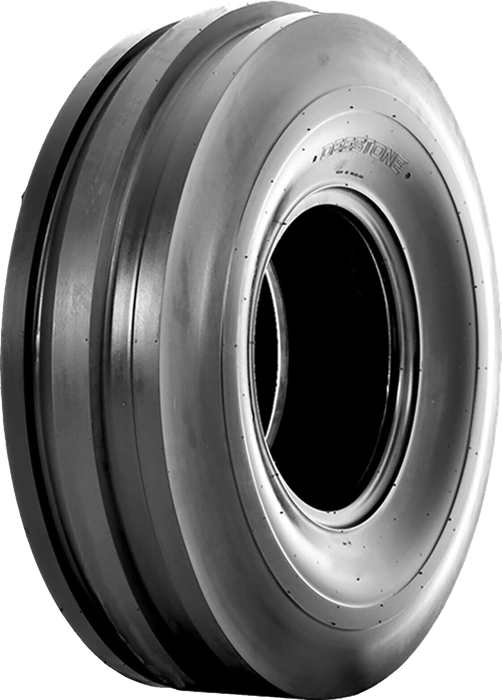

The short answer: a Ford 8N runs 5.50-16 fronts and 10-28 rears — that’s the 1952 spec, and early 8Ns (like every 9N) shipped on 4.00-19 fronts instead. The wartime 2N typically matches the 9N pattern. That’s it. Those are the numbers a surprising number of N-series pages talk all the way around without ever printing.
If you’ve got five more minutes, the rest of this covers the front-tread decision, the rear options, and the tube question — which on a tractor this age isn’t really a question.
First: which N do you have?
Ford built the three Ns back to back — the 9N starting in 1939, the stripped-down 2N through the war years, and the 8N from 1947 to 1952. They look alike at twenty feet, and parts interchange enough that seventy-plus years of owners have mixed and matched wheels between them. Which is exactly why the sidewall on your tractor, not the model badge, gets the final vote on size. Treat the table below as the factory starting point.
Ford 9N (1939–1942)
- Front
- 4.00-19
- Rear
- 10-28
Ford 2N (wartime)
- Front
- Typically 4.00-19 — verify sidewall
- Rear
- Typically 10-28 — verify sidewall
Ford 8N, early
- Front
- 4.00-19
- Rear
- 10-28
Ford 8N, 1952 spec
- Front
- 5.50-16
- Rear
- 10-28
Two wrinkles worth knowing. Later restorations of the 9N sometimes carry 11-28 rears, and on the 8N, 11.2-28 is the modern equivalent of that old 10-28 marking — same wheel, newer sizing convention. If your rear sidewall reads 11.2-28, nobody swapped anything; the industry just renamed the size. Our size-reading guide decodes the whole system if the markings look like hieroglyphics.
Fronts: this is what tri-rib was made for
The N-series has no power steering. Every bit of steering authority comes from the front tread biting the ground, and that’s the entire reason the classic three-rib front tire exists — those raised ribs cut into loose dirt and gravel and make the tractor go where the wheel points instead of plowing straight ahead. We stock the Deestone D401 tri-rib for exactly this job. If your 8N runs the 1952 front, that’s 5.50-16 — on the shelf in Cleveland. The full rib-tread story, including when a modern owner should switch away, is in our tri-rib guide.
Rears: period-correct look vs. working tread
Here’s the honest fork in the road. If your N still earns its keep — brush hog, box blade, firewood duty — buy a modern AG/R1 chevron lug in your rear size and don’t look back. Modern rubber compounds grip better and crack slower than anything Harry Ferguson ever saw. If the tractor is a show piece, reproduction tires with a period-correct bar tread keep the judges happy, and fresh reproduction beats original cracked rubber every time — we wrote up the whole period-look question separately. Our rule after 22 years: “Nobody at the fair checks your tread pattern from the bleachers, but everybody notices a tractor stuck on the trailer ramp.”
Tubes: not optional on seventy-year-old rims
These tire sizes predate tubeless. The rims were never designed to seal a bead on their own, and after seven decades of weather most of them couldn’t anyway. Run tubes, full stop. On the bigger sizes that means a TR-15 valve stem — the heavier ag-style stem — rather than the little TR-13 you’d see on mower tires. One stocking note that saves a phone call: the front tube for a 16-inch N-series wheel is usually sold as a 550/600-16 combo tube, which covers the 5.50-16 factory front and the 6.00-16 that previous owners commonly upsized to — one tube, either tire. Everything tube-shaped lives on our inner tubes page, and if your rims are more rust than steel, read Greg’s old-rim guide before you spend a dime on rubber.
The order, start to finish
- Read your actual sidewalls — front and rear. The badge says 8N; the wheels might say otherwise.
- Fronts: tri-rib (Deestone D401) if the tractor works or you want the correct look — which, conveniently, are the same answer.
- Rears: AG lug for work, period bar tread for shows. 4-ply either way.
- Add tubes for every position. TR-15 stems on the big sizes.
The fitment pages pair each machine with what’s physically on our Cleveland shelves: Ford 8N and Ford 9N. Orders ship in one business day.
Common questions
Tires in this guide
Sold and shipped by Greater Cleveland Tire — from our Cleveland warehouse in one business day.
Front pick